
Wise Men Still Seek Him
We’re moving forward in the timeline now, past the shepherds and the immediate birth, to a group that traveled a long way to find the Christ-child: the Wise Men, or the Magi.
These men weren't Jews. They were likely astrologers or scholars from the East, representing the first time the light of Christ was seen and pursued by the Gentile world. They beautifully prove that the Gospel is for everyone, regardless of where they come from or what they believe.
Their motivation is captured in their simple, powerful question upon arriving in Jerusalem (Matthew 2:2, KJV): "Saying, Where is he that is born King of the Jews? for we have seen his star in the east, and are come to worship him."

God Is With Us: Emmanuel
If you could remember only one promise of Christmas, what would it be? For me, it would have to be the meaning behind the name given to Christ.
As Joseph wrestled with Mary’s pregnancy, the angel appeared to him, referencing the prophet Isaiah, and said (Matthew 1:23, KJV): "Behold, a virgin shall be with child, and shall bring forth a son, and they shall call his name Emmanuel, which being interpreted is, God with us."
Think about the depth of that promise: "God with us."
In the Old Testament, God’s presence was often confined to the Temple, or sometimes manifested as a terrifying cloud or fire. He was holy, distant, and powerful—and rightly so.

A Host of Angels
After the single angel delivered the good tidings to the astonished shepherds, something even more magnificent happened. Luke 2:13 (KJV) records it: "And suddenly there was with the angel a multitude of the heavenly host praising God, and saying..."
Imagine the scene: The night sky, dark and silent, is suddenly flooded with light, and the silence is shattered by the sound of an entire army of angels—a "heavenly host"—not fighting a battle, but singing a song of praise!
And what was the song? Luke 2:14 (KJV): "Glory to God in the highest, and on earth peace, good will toward men."
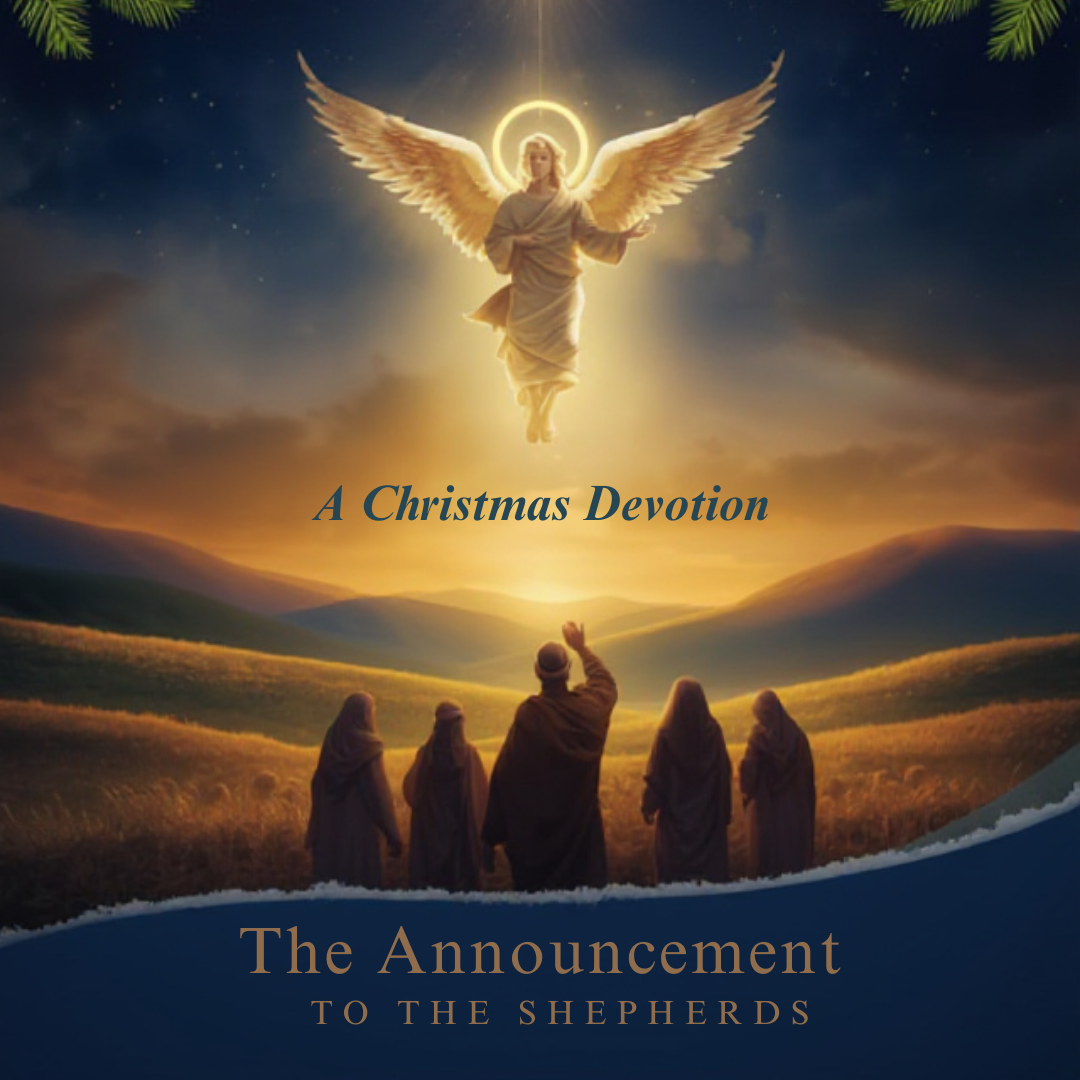
The Announcement to the Shepherds
After the quiet intimacy of the birth, the story bursts into light and sound. The first announcement of Christ’s arrival didn't go to the priests in the Temple, the Roman governor, or the wealthy in the city. It went to the shepherds out in the field.
These were common, working-class men, often marginalized and viewed as spiritually suspect because their job made it hard to keep all the ceremonial laws. Yet, God chose them.
The angel appeared and told them (Luke 2:10-12, KJV): "Fear not: for, behold, I bring you good tidings of great joy, which shall be to all people. For unto you is born this day in the city of David a Saviour, which is Christ the Lord. And this shall be a sign unto you; Ye shall find the babe wrapped in swaddling clothes, lying in a manger."
Why the shepherds?
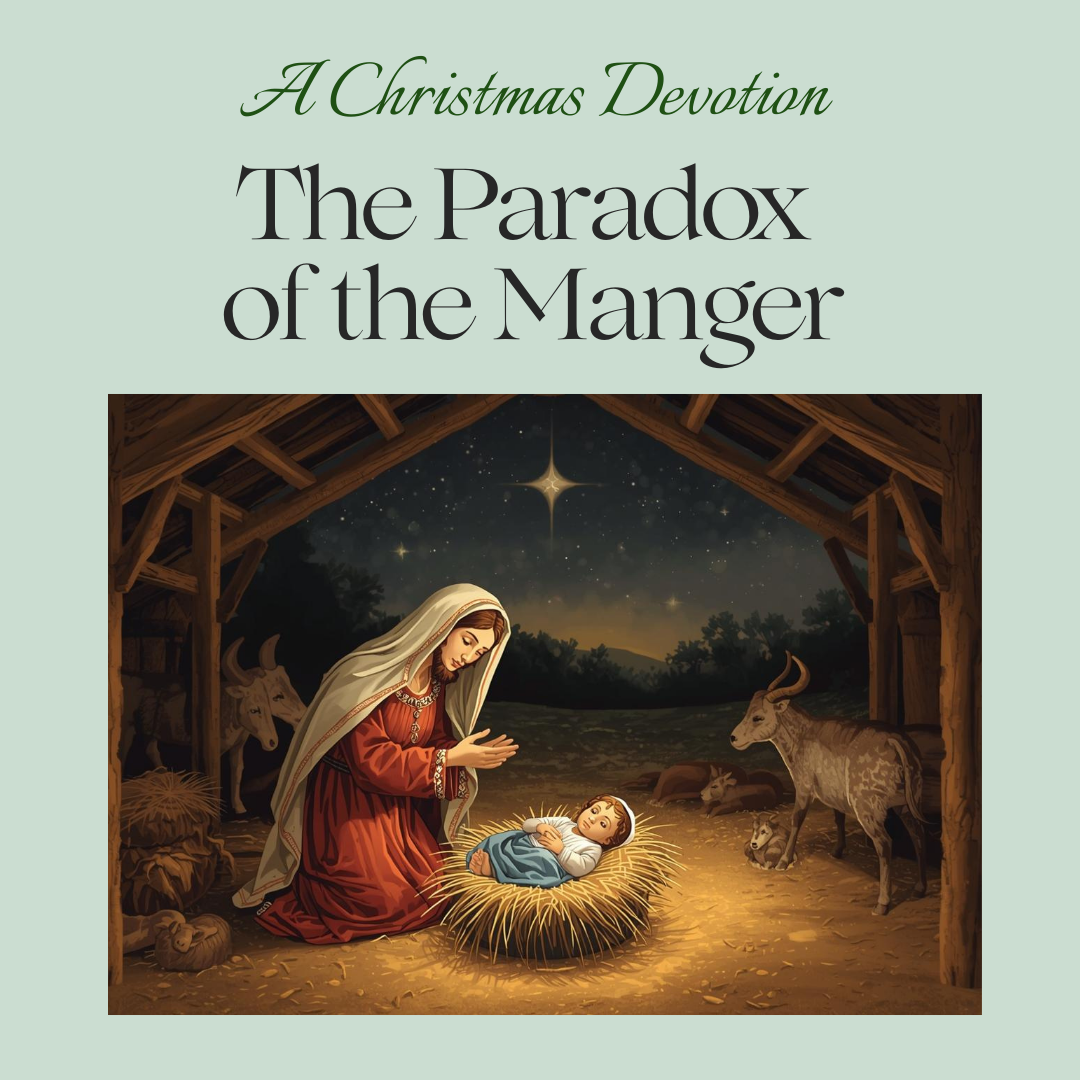
The Paradox of the Manger
Yesterday, we reflected on the fact that Christ was laid in a manger because there was no room in the inn. Today, let’s focus on the manger itself.
A manger, as we know, is a feeding trough for livestock. It's rough, crude, and smells like hay and manure. It is the absolute antithesis of a throne or a royal crib. Yet, this rough-hewn box became the first sanctuary of the King of Kings.
This is the ultimate paradox of Christmas. It challenges everything the world teaches us about power, glory, and significance.
Paul writes beautifully about this principle in 2 Corinthians 8:9 (KJV): "For ye know the grace of our Lord Jesus Christ, that, though he was rich, yet for your sakes he became poor, that ye through his poverty might be rich."